

Vomiting in Dogs - When to Head to the Vet
20th Aug 2026
You're clearing away the breakfast bowls when you hear it: that unmistakable heaving sound from the next room. Your dog has been sick on the rug, and now you're standing there wondering whether to grab the paper towel or the car keys.
Knowing when to worry about a dog's vomiting really comes down to recognising a few key signs. A single episode from a dog who's otherwise bright, wagging, and keen for their walk is a very different situation from repeated vomiting in a dog who's flat, off their food, or clearly uncomfortable.
Here's how to tell the two apart, what you can do at home, and when a vet visit shouldn't wait.
Quick Answer
Short on time? Here's the quick guide to when to worry about dog vomiting:
- A one-off vomit in a dog who's otherwise normal is usually nothing to panic about. Keep an eye on them for the next day.
- Repeated vomiting (roughly three or more times in a day) or vomiting that carries on past 24 hours is a reason to call your vet.
- Blood in the vomit, a coffee-ground appearance, a swollen or painful belly, unproductive retching, collapse, or any sign of poisoning is an emergency; get help straight away.
- Puppies, senior dogs, and dogs with existing health conditions dehydrate quickly, so lower your threshold for ringing the vet.
- Many mild cases settle at home with rest, water, a bland diet, and vet-recommended gut support.
Why Do Dogs Vomit?
Vomiting is a symptom, not a diagnosis, which is why it can point to so many different things. Vomiting in dogs can be caused by many disorders, including digestive system disease, kidney or liver failure, pancreatitis, nervous system disorders, and the ingestion of irritating substances and poisons.
Most of the time, though, the cause is far less dramatic. Dogs are natural scavengers, and a lot of vomiting traces back to simple dietary indiscretion like eating too fast, raiding the bin, wolfing down grass, or trying something that didn't agree with them. These upsets tend to be short-lived.
The reassuring part is that isolated episodes often resolve on their own. When a dog has been vomiting only briefly (less than three to four days) and shows no other signs, the picture is generally far less concerning than ongoing or repeated vomiting paired with other symptoms.
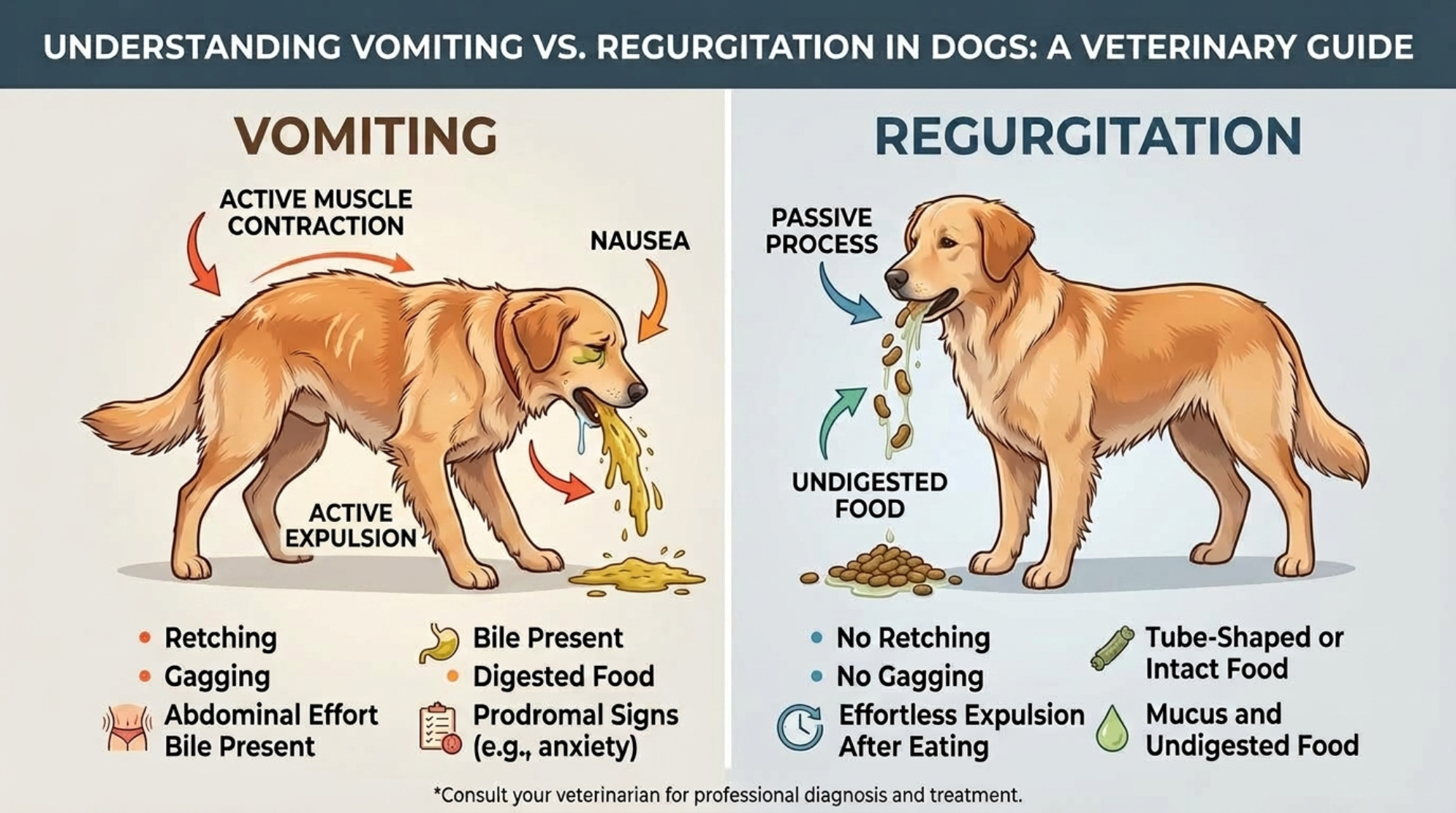
Vomiting or Regurgitation? They're Not the Same
Vomiting is an active process. There's usually drooling, retching, and heaving beforehand, and what comes up is partly digested food or yellow bile from the stomach. Regurgitation is passive. Food comes back up soon after eating with no warning and no effort, still looking undigested because it never made it past the oesophagus.
Why does the difference matter? Because they point to different problems, and telling your vet which one you saw helps them narrow things down faster.
When to Worry About Dog Vomiting: The Red Flags
Some vomiting can wait and watch; some can't. The clearest guide is to look at how often it's happening, how long it's going on, and what else is going on with your dog.
Call your vet promptly if you notice any of these:
- Vomiting that keeps happening. Repeated episodes in a short window, or vomiting that continues beyond 24 hours.
- Your dog also seems lethargic, weak, or depressed, or is refusing food and water.
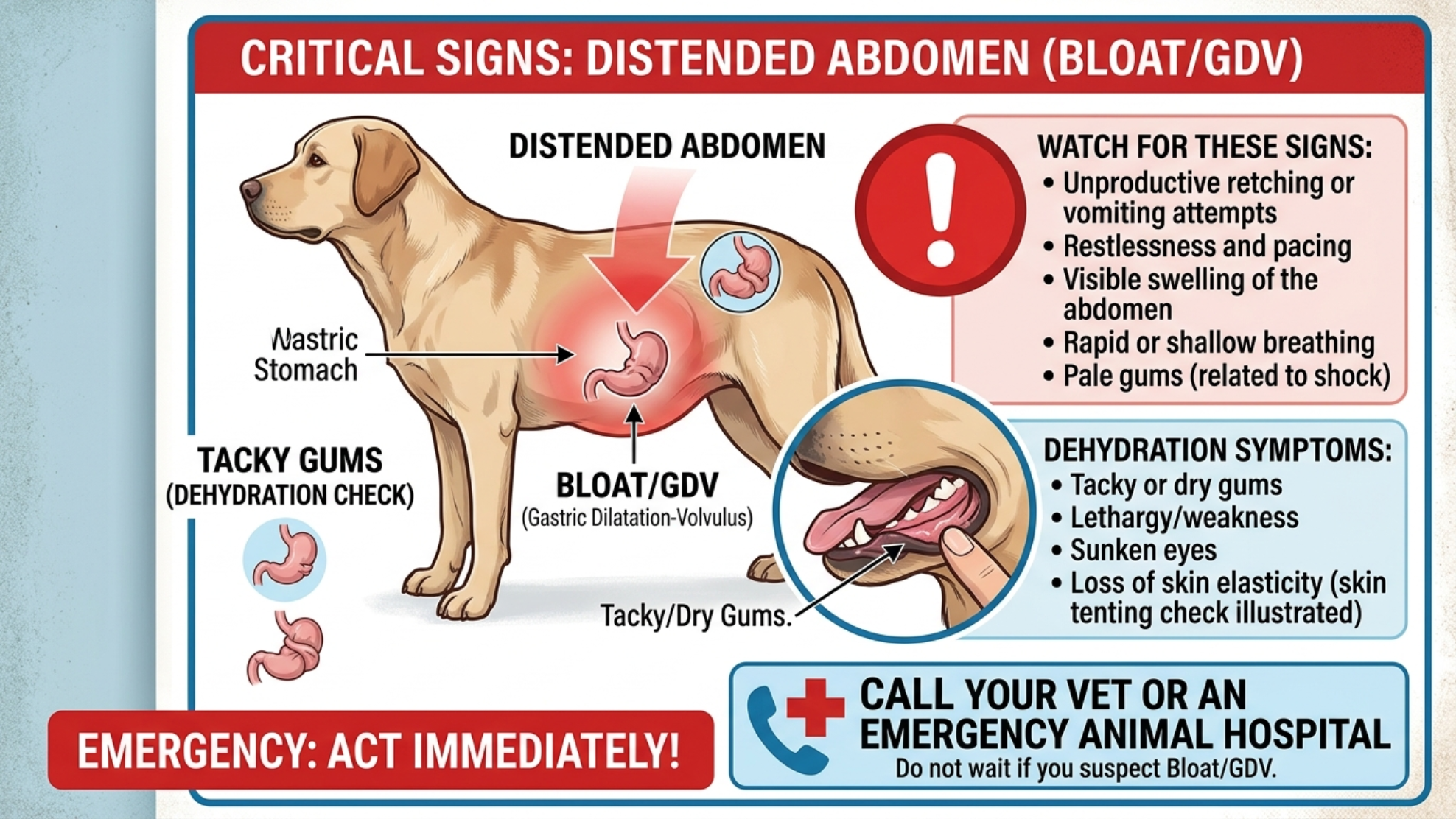
- Signs of dehydration, such as tacky gums, sunken eyes, or skin that's slow to spring back.
- Vomiting alongside diarrhoea, which speeds up fluid loss considerably.
If a dog has been vomiting for more than two days, you should speak to your vet, and you should also contact your vet if your dog is refusing to eat or is lethargic or depressed. The more serious form of gastroenteritis, where you may notice blood in your dog's vomit or poo, is also a sign that needs urgent treatment.
Then there are the situations that mean skip the wait-and-see entirely and get to a vet now:
- Blood in the vomit, or vomit that looks like coffee grounds, can signal bleeding in the gut.
- A bloated, hard, or painful belly, especially with unproductive retching (trying to vomit but nothing comes up). In deep-chested breeds, this can point to bloat, or gastric dilatation-volvulus (GDV), which is life-threatening.
- Suspected poisoning or swallowing of a foreign object (a sock, a bone, a toy).
- Collapse, pale gums, or a distressed, weak dog.
Puppies and senior dogs deserve extra caution. They have far smaller reserves and can go downhill quickly, so what might be a monitor-at-home situation in a healthy adult dog is often a same-day vet call in a very young or very old one.
What the Colour of Dog Vomit Can Tell You
The look of the vomit gives you useful clues to pass on to your vet, even if it isn't a diagnosis on its own.
- Yellow or foamy often means an empty stomach and bile, common first thing in the morning or after repeated vomiting.
- Fresh food or grass usually indicates a recent, simple upset.
- A few flecks of red can come from the effort of retching, but larger amounts of blood, or that dark coffee-ground look, are reasons to act fast.
If you can, take a photo (or even a small sample) before you clean up. It sounds unglamorous, but it can save real time at the clinic.
Settling a Mild Upset at Home
If your dog has vomited once or twice, is still bright, and shows none of the red flags above, it's reasonable to give their stomach a chance to settle before rushing in. Always ring your vet first if you're unsure, particularly for puppies, seniors, or dogs on medication.
Rest the stomach for a short period, then offer small amounts of water so your dog stays hydrated without gulping. Once they've held water down, reintroduce food slowly with small, bland meals rather than their usual dinner. Purpose-made foods for dog digestion can make this stage easier on a sensitive gut.
In cases of gastroenteritis, food is often withheld for 12 to 24 hours and then slowly reintroduced with small, frequent feedings of a highly digestible, low-fat diet, with your vet advising on the best plan for your dog.
Supporting the gut can help during recovery, too. A probiotic such as Purina FortiFlora for dogs is designed to promote a healthier balance of gut bacteria, and there's a broader range of probiotics for dogs to discuss with your vet. Where nausea needs settling, vets often reach for an anti-nausea medication. Maropitant, the active ingredient in a Cerenia injection, is one commonly used option.
How to Help Prevent Dog Vomiting
Not every episode is avoidable, but a few habits genuinely cut the odds.
- Introduce any new food gradually over a week or so, rather than switching overnight
- Keep bins, compost, and human leftovers well out of reach
- Slow down fast eaters with a slow-feeder bowl or a puzzle feeder
- Stay on top of routine deworming and parasite prevention, as intestinal parasites can cause vomiting.
- Keep known toxins locked away, including chocolate, grapes and sultanas, and xylitol (found in some sugar-free products)
Still Not Sure When to Worry About Dog Vomiting?
Most vomiting in dogs is mild, short-lived, and settles with a bit of rest and care. When you're weighing up when to worry about dog vomiting, the trick is to watch for the signals that indicate it's moving from a minor upset to a real problem. When those appear, or when your gut tells you something's off, a phone call to your vet is always the right move. You know your dog better than anyone, and acting early is never the wrong choice.
If your vet has recommended a treatment or gut-support product, meet The Animal Pharmacy – we're Australia's original online pet pharmacy, stocking vet-quality medications, supplements, and digestive foods at prices below the typical clinic markup, and delivering them to your door. Prescription items simply need a script from your vet, and our team is on the phones six days a week on (02) 8599 9759 if you'd like a hand finding the right product.
This article is general information only and isn't a substitute for veterinary advice. If you're concerned about your dog's health, please contact your vet.