

Dog Ear Infections: Signs & Treatment
18th Aug 2026
A dog that keeps tilting its head, pawing at one ear, or leaving a faint yeasty smell on the lounge is usually telling you something is wrong down in the ear canal. Spotting dog ear infection symptoms early can spare your pet a lot of discomfort and spare you a bigger vet bill later on.
Ear infections (known medically as otitis externa) are one of the most common reasons Australian dogs end up at the vet, and the good news is that most clear up well once the right dog ear infection treatment is matched to the underlying cause.
Top Tips
- Common signs include head shaking, scratching, redness, an unpleasant odour, and ear discharge.
- About 7 in every 100 dogs are diagnosed with otitis externa in a single year, and floppy-eared breeds are at the highest risk.
- Most ear infections are secondary to another problem. Allergies are the single most common primary cause.
- Treatment usually combines a proper ear clean with prescription ear drops, and the underlying cause has to be addressed, or the infection keeps coming back.
- Ear medications are prescription-only in Australia, so a vet diagnosis (and a script) always comes first.
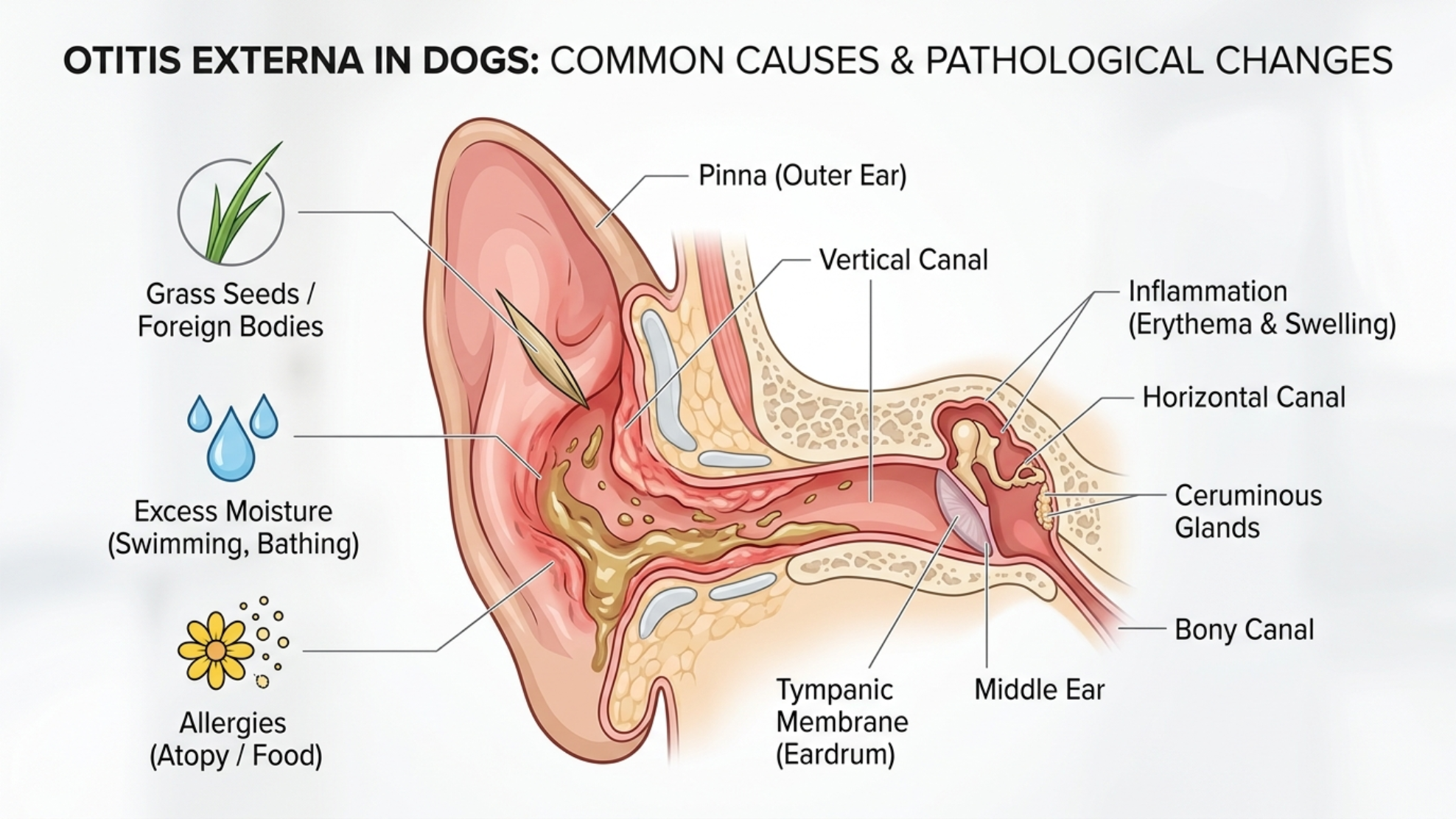
Dog Ear Infection Symptoms to Watch For
The earliest signs are often behavioural. Your dog might shake its head more than usual, rub an ear along the carpet, or scratch at one side repeatedly. Because the ear is sore, some dogs also shy away from head pats or seem slower to respond when you call them.
Physical changes usually follow. Typical signs of otitis externa include head shaking, a foul odour, redness and swelling of the ear, scratching, discharge, and scaly skin. The ear can be painful, itchy, or both, and one or both ears may be affected.
Watch for these dog ear infection symptoms in particular:
- A strong, yeasty or musty smell from the ear
- Brown, yellow, or bloody discharge, or a build-up of dark wax
- Redness, heat, or swelling inside the ear flap or canal
- Constant scratching, head shaking, or rubbing the ear on furniture
- Sensitivity or crying out when the ear is touched
- A head tilt, loss of balance, or reduced hearing in more advanced cases
A head tilt or unsteady balance can indicate a deeper middle or inner ear problem that requires prompt veterinary attention rather than a wait-and-see approach.
What Causes Ear Infections in Dogs?
Otitis externa is rarely a simple, one-off event. It is a multifactorial condition, meaning several factors usually align before an infection takes hold.
The most common primary trigger is allergy. Allergic skin disease is the leading cause, often followed by secondary yeast (Malassezia) and bacterial infections once the ear environment becomes inflamed. If your dog is also chewing its paws or has itchy skin, an ear infection may be part of a bigger allergy picture. Our guide to dog scratching covers this connection in more detail.
Other common causes and contributors include:
- Moisture: water trapped after swimming or bathing creates a warm, damp canal where yeast and bacteria thrive.
- Ear mites and parasites: more common in puppies, and highly itchy.
- Foreign bodies: grass seeds are a very Australian culprit over spring and summer, lodging in the canal and driving infection.
- Ear shape and hair: dogs with heavy, pendulous ears or hairy canals trap heat and moisture more easily.
Studies have reported that breeds with pendulous (drop) ears had around 1.76 times the odds of the condition compared with erect-eared breeds. Basset Hounds, Spaniels, and other long-eared breeds sit near the top of the risk list.
Dog Ear Infection Treatment
Effective dog ear infection treatment starts with a diagnosis. Your vet will look inside the canal with an otoscope and usually take a swab to examine under the microscope (cytology). This step matters because the treatment for a yeast infection differs from that for a bacterial infection or ear mites.
Most treatment plans involve three parts:
- Cleaning: flushing debris, wax, and discharge from the canal so medication can reach the skin.
- Prescription medication: topical ear drops for dogs that target the specific organism, sometimes alongside anti-inflammatories or oral medication for more stubborn cases. (Cats get ear infections, too, and there are dedicated ear drops for cats as well.)
- Treating the underlying cause: managing the allergy, parasite, or moisture problem so the infection does not simply return.
Dogs with bacterial and yeast infections often need repeat checks until the ear is clear, commonly over 2 to 4 weeks, and long-standing cases can take months. Finishing the full course, even after your dog seems better, gives the best chance of a lasting result.
Avoid poking around or dropping home remedies into a red, painful ear before your vet has had a look. If the eardrum is ruptured, some cleaners and products can cause real harm. Recurring skin and ear allergies may also call for ongoing dog skin treatment as part of the plan.
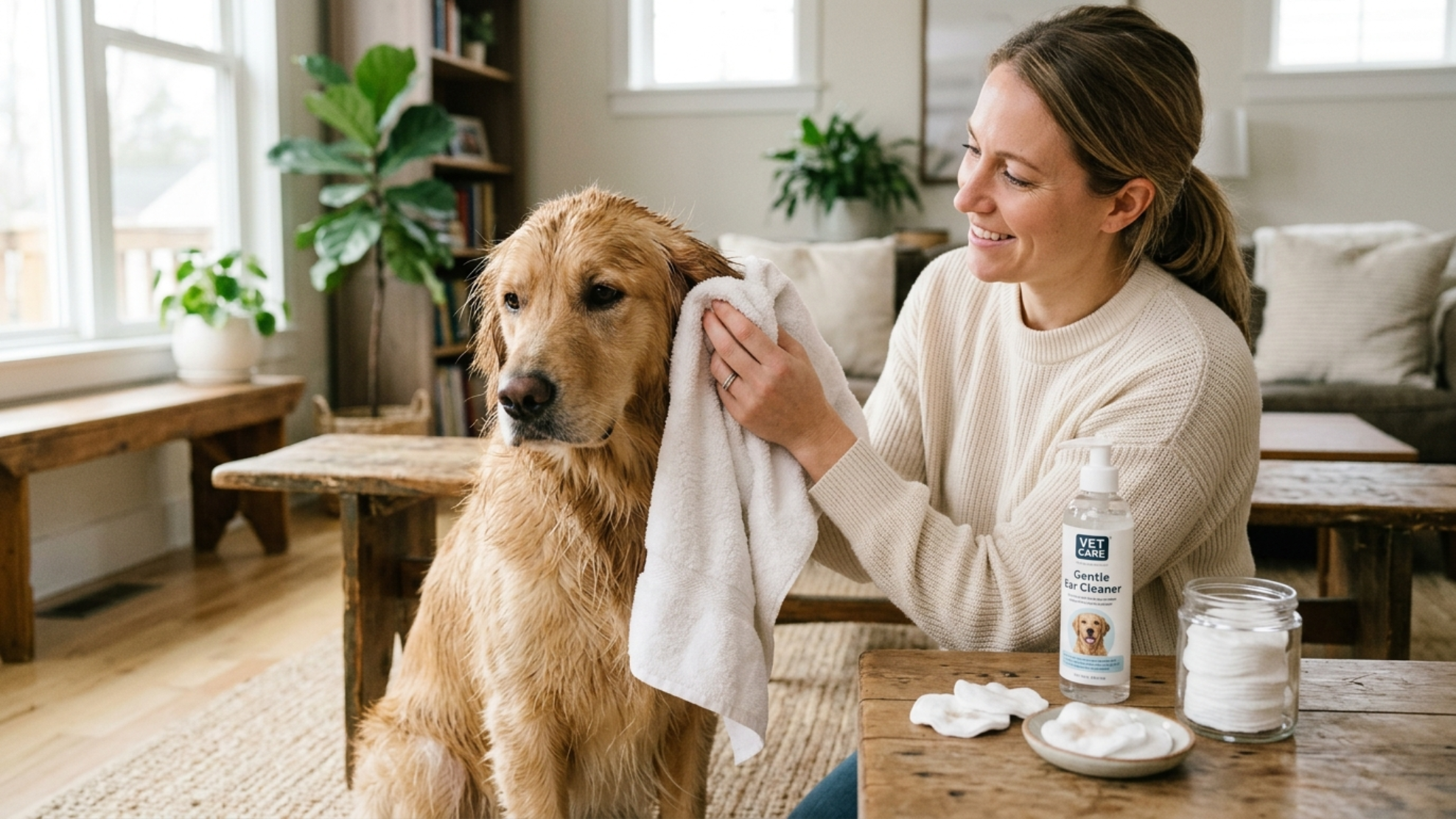
How to Prevent Recurring Ear Infections
Prevention is far easier than clearing a chronic infection. A few simple habits make a big difference, especially for water-loving or floppy-eared dogs.
- Dry ears after water. Gently dry the ears after swimming or bathing to stop moisture from settling in the canal.
- Check weekly. A quick weekly look means you catch redness, wax, or odour early, before it becomes a full infection.
- Clean only when appropriate. Use a vet-recommended ear cleaner for maintenance, but never flush an ear that is already sore, smelly, or discharging.
- Manage allergies and parasites. Staying on top of underlying skin allergies and keeping up regular parasite prevention removes two of the biggest triggers.
When to See Your Vet
Book a vet visit if your dog shows any persistent ear signs or if a mild irritation hasn't settled within a day or two. A head tilt, loss of balance, or apparent hearing loss warrants prompt attention, as these can signal that the infection has moved deeper.
Left untreated, otitis externa can become painful, chronic, and much harder to control, so early action is always worth it. When in doubt, your vet is the right first call.
Keeping your dog's ears healthy comes down to spotting the signs early, treating the true cause, and following your vet's plan through to the end. For vet-prescribed ear medications and trusted pet health products at everyday prices, see The Animal Pharmacy, Australia's original online pet pharmacy. We stock vet-prescribed ear medications and everyday pet health products, often at a lower price than a clinic dispensary.