

Diarrhoea in Dogs: Causes, Treatment & When to See the Vet
16th Aug 2026
You come downstairs to a puddle on the kitchen floor, or your dog asks to go out three times before breakfast and produces something you'd rather not describe.
Loose stools are one of the most common reasons Australian pet parents ring their vet, and most of the time, it settles on its own. But knowing the dog diarrhoea causes to watch for, the treatment that actually helps at home, and the warning signs that mean "vet now" takes a lot of the worry out of a messy morning.
Must-Know Insights
- Most mild cases of dog diarrhoea clear up within a day or two with rest, water and a bland diet.
- The usual culprits are dietary indiscretion (scavenging), a sudden change in diet, stress, and intestinal parasites.
- Bloody diarrhoea, repeated vomiting, lethargy, a bloated belly, or any diarrhoea in a young puppy is a reason to call your vet straight away.
- Never give human anti-diarrhoea medicines to your dog unless your vet tells you to. Some are toxic to certain breeds.
- Supportive products such as a bland diet, probiotics, and rehydration can help a settled dog recover faster.
What Counts as Normal and What Doesn't
Healthy dog stool is firm, segmented, and easy to pick up. Diarrhoea simply means stools that are softer or more liquid than usual, often with more frequency and more urgency. One-off soft stools after a big day or a new treat usually mean very little. Pets often have a short bout of diarrhoea lasting around 24 hours as something irritating passes through their system, though it can occasionally point to a more serious problem.
Colour and content are worth a quick look before you clean up. Watery stools, mucus, or a small volume passed with lots of straining can suggest the large bowel is inflamed. Large-bowel diarrhoea (colitis) tends to show up as small, more liquid stools passed frequently, sometimes with mucus or streaks of blood, and often with a sudden sense of urgency.
Common Dog Diarrhoea Causes
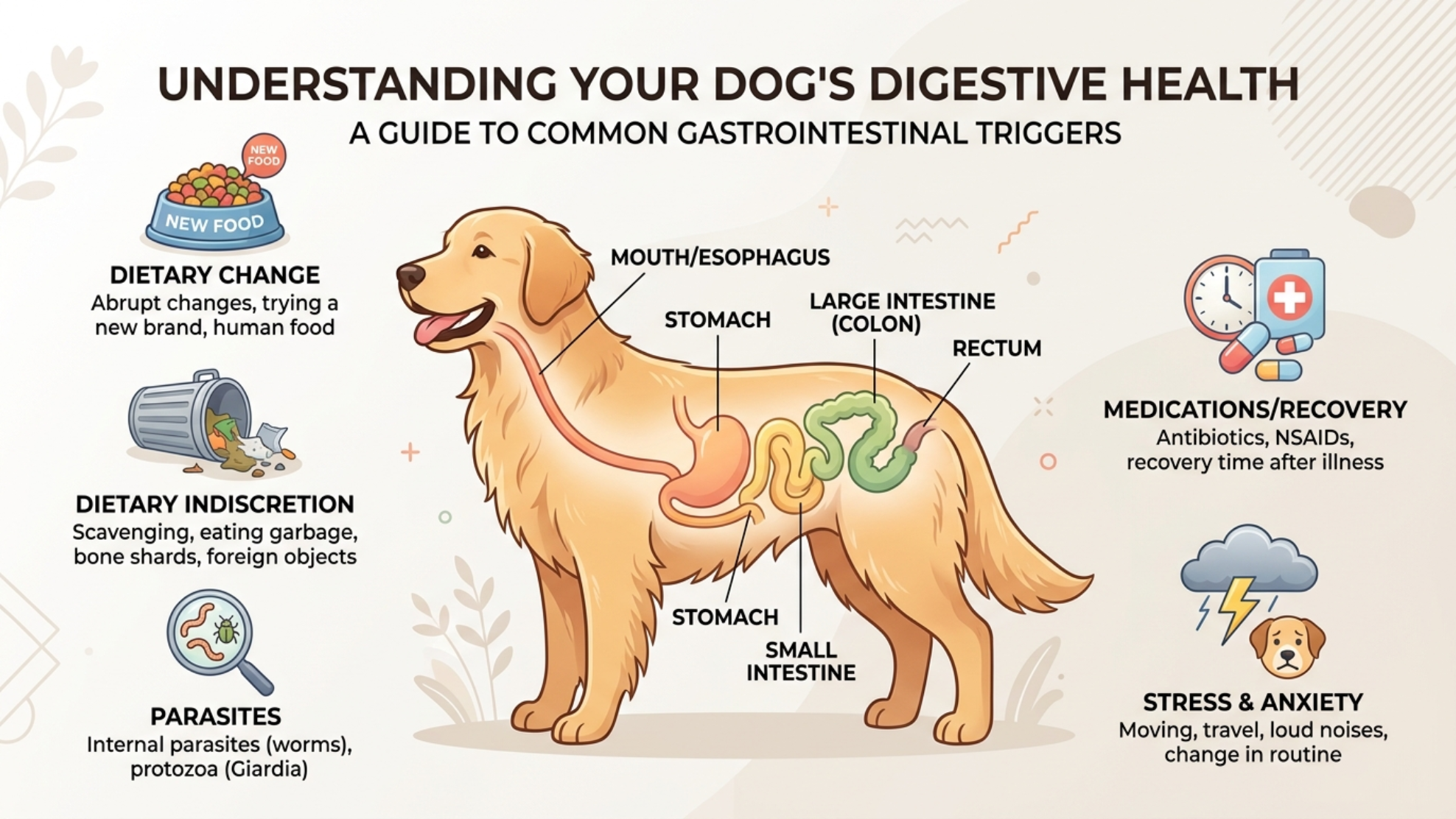
Diarrhoea is a symptom, not a disease in itself, which is why the causes of dog diarrhoea range from trivial to serious. The most frequent triggers include:
- Dietary indiscretion. Bin raids, table scraps, a stolen sausage or something unspeakable from the garden. This is the classic cause and usually the shortest-lived.
- A sudden change in diet. Switching foods too quickly is a common trigger. New food should be introduced gradually over 7–10 days so the gut can adjust.
- Stress and anxiety. Boarding, travel, a house move, or a new puppy settling in can all upset a sensitive stomach.
- Intestinal parasites. Worms and protozoa, such as Giardia, are well-recognised causes, and puppies are especially vulnerable. s.
- Infections. Viral and bacterial infections can cause more severe illness. Canine parvovirus is the one to take seriously. The RSPCA estimates more than 20,000 cases occur across Australia each year.
- Longer-term conditions. Food intolerances, inflammatory bowel disease and other chronic issues can cause diarrhoea that comes and goes over weeks.
When Is Dog Diarrhoea Serious?
A bright, bouncy dog with one soft stool is very different from a flat dog who can't keep water down. Contact your vet promptly if you notice any of the following:
- Blood in the diarrhoea, or black, tarry stools
- Repeated vomiting alongside the diarrhoea
- Lethargy, weakness, or refusing food and water
- A painful, swollen or bloated abdomen
- Signs of dehydration, such as tacky gums or skin that's slow to spring back
- Diarrhoea lasting more than 48 hours, or that keeps returning
- Any diarrhoea in a young puppy, a senior dog, or a dog with an existing health condition
Parvovirus is life-threatening but treatable, so early, intensive hospital care is vital. Acute haemorrhagic diarrhoea syndrome (bloody diarrhoea with vomiting) can also progress quickly; prompt intravenous fluid therapy is the mainstay of treatment. Neither is something to wait out at home.
Dog Diarrhoea Treatment at Home
For an otherwise well adult dog with mild, recent diarrhoea, sensible home care is often enough. Effective dog diarrhoea treatment starts with the basics:
- Keep the water up. Diarrhoea loses fluid quickly, so make sure fresh water is always available to prevent dehydration.
- Offer a bland diet. Small, frequent meals of plain, easily digestible food give the gut a gentle reset. You can browse digestive care dog food options designed for exactly this.
- Consider a probiotic. Supporting the gut microbiome can help a dog bounce back. A vet-formulated option like FortiFlora probiotic for dogs is a popular choice, and you'll find a wider range of probiotics in dogs to suit different needs.
- Reintroduce normal food slowly. Once stools firm up, mix normal food back in over two to three days rather than all at once.
Added dietary fibre improves diarrhoea in many dogs, and supportive care (fluids, electrolytes and dietary modification) is central to recovery. Never reach for human anti-diarrhoea or anti-inflammatory medicines unless your vet has recommended them, as some are dangerous for dogs.
If vomiting is part of the picture and your vet has assessed your dog, a prescription anti-nausea medicine such as Cerenia for dogs may be part of the plan. Always under veterinary direction.
How to Prevent Diarrhoea in the First Place
You can't stop every upset tummy, but a few habits genuinely lower the odds:
- Change foods gradually over a week to ten days
- Keep bins secured and be firm about table scraps and rich treats
- Stay on top of routine worming and vaccinations, which protect against parasites and serious infections like parvovirus.
If your dog has a sensitive stomach, a consistent, high-quality diet with ongoing gut support can reduce flare-ups.
The Takeaway for Pet Parents
Most dog diarrhoea is a passing nuisance that settles with rest, water and a gentle diet. Trust your instincts: a happy dog with one soft stool can usually be watched at home, while blood, repeated vomiting, lethargy or a sick puppy always warrant a call to your vet.
Caring for a poorly pup shouldn't mean a stressful, expensive trip across town. At The Animal Pharmacy, you can order the bland-diet foods, probiotics and vet-prescribed medicines your dog needs and have them delivered to your door, often at prices well below a traditional clinic. Browse The Animal Pharmacy or call our team on (02) 8599 9759.
This article is general information only and isn't a substitute for veterinary advice. If you're worried about your dog, please contact your vet.